
What is the Pillars // Parents Project?
"Demographics" are at the core of many major news stories. Stories about immigration, economic growth, religion, rising prices, social security, international relations, and many other topics are heavily influenced by the number of children families are having. Historically, there was much hand-wringing in media about out-of-control population growth. But nowadays, you will find many more stories lamenting declining birth rates. We decided to investigate this issue at the local, individual level, by speaking to the people who are connected to this story in the deepest way: parents. By writing about parents in our communities — people who thanklessly undertake the essential, difficult, decades-long job of creating and raising the next generation — we can recognize them and add their stories to the public record. These "ordinary" people seldom get recognized by media!
By Matthew Rindge
She stood slumping in a massive kitchen. A huge slab of highly figured marble countertop was behind her. She saw her distorted reflection in the stainless-steel sheen of the refrigerator.
Images of her kids – dirty and sticky from being drug around the French Quarter the night before, fed a diet of candy and soda – swirled in her mind. These images bumped against the voices in her head.
One of them told her, “Just take a drink. Just a little sip. It’ll make everything better.”
She reached a shaky hand up towards the freezer door. Her bottle of Tito’s lay ensconced inside. Nestled between stacks of microwave meals and a heap of teething rings.
“No,” she silently spoke to herself.
She somehow willed her hands to stop shaking.
She walked to the kids' bedroom and looked at baby Joshie in his crib. He looked sticky. And smelled like piss. He needed a bath.
She went to the bathroom, palatial and finely tiled. Classy, like everything else in this house. But she didn’t feel classy.
She started the water running and went back to get Joshie from his crib. She reached down to pick him up and her hands began to tremble again. They just as quickly stopped. Thank God.
She lifted the sticky baby out of the crib. He barely began to wake and started burbling.
“I know, I know,” she shushed him. Her motherly instincts kicked in; the ones left that the drinking and drugs hadn’t dissolved. She pulled her baby tightly to her chest and carried him to the bathroom. The sound of running water soothed the incessant screaming in her head that was crying for another drink.
She slid the baby tub under the water to fill it and squirted some soap in deftly. All with one hand, clutching her baby to her chest. It was a wonder her hands weren’t shaking.
Then, as she lowered him into the water, almost as if thinking about it caused it to happen, her hands began to tremble again.
“No. Not now.”
She silently prayed.
She tried to focus her mind on something else. She started to wash little Joshie. He was still somewhat lethargic.
The water was waking him up, and he was becoming more active. His increasing alertness, and growing soapiness, was making him more difficult to hold. The screeching of her thoughts in her head had numbed out his plaintive cries. But they were slowly breaching the walls.
His crying seemed to awaken the shaking in her hands. She tried to will them to stop again, but it didn’t work. Her hands started to shake even more.
It’s hard to picture the Maggie I am speaking to right now trying to wash a baby with shaking hands.
She looks polished, make up on point, seemingly calm and composed. Even as her two kids run around the park, screaming and picking up other park-goers' drink bottles. It has been a long, difficult journey that has led her to this park with me.
Maggie started using ecstasy in high school. She was hanging out with older kids, all the kids she shouldn’t have been. The ecstasy would “melt all the uncomfortable off her skin”; allow her to feel normal for a bit. Until reality came rumbling in the next morning like a dubstep breakdown. Her sweet little old grandma could barely get her up for school. So she dropped out.
She got her GED. Then, the allure, the money and status of her sister’s friends, drew her out to New Orleans. To the seemingly glamorous, bigger-city life of being a stripper.
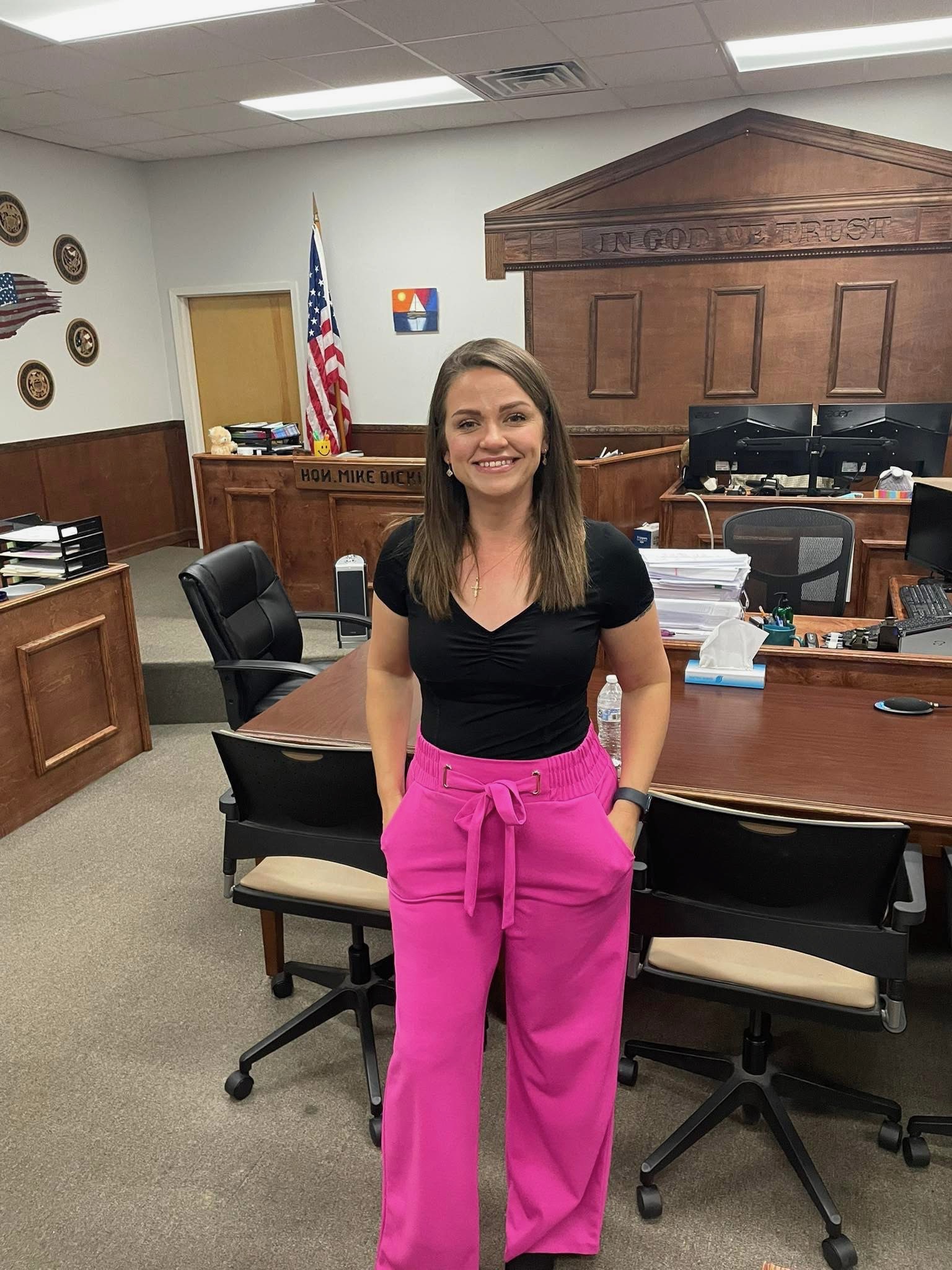 Stripping led to drugs and soon, at 23, Maggie was in rehab. It was not the last time. She spent some time pregnant in rehab. Rehab became “What we do. We just go to rehab.” Life would get too rough and she would run to rehab. Or she would hide there to keep her kids.
At one point she was living in rehab with her three kids. She would leave these three kids at the treatment center to go dance in strip clubs in downtown New Orleans on the weekends. She would show back up to the treatment center Mondays exhausted, falling asleep in group.
Eventually this became too tiring, and she left the treatment center. She began drinking to cope with the anxiety of stripping. Drinking and smoking weed gave way to harder drugs – doing coke because she was tired. Then meth when nobody had any good coke. Then Xanax because she was too wound up from the meth.
The drugs were one thing. But it was the lifestyle of the club, and the money that came with it, that kept Maggie coming back. Even when the glitter in the club wasn’t so glittery.
“We all had our spots in the dressing room. I remember this red velvet chair where this girl would sit next to me. Her name was Penny Lane. And it was her real name too, because her mama was a stripper. And the dressing room is like you're watching yourself on a movie because of all the mirrors, right?
And Penny would like be sitting there. She always had food on her face because she was doing heroin. And I'd be like, ‘Penny, you got something on your face’. And then one day I came to work and Penny never came. The next day I came to work and Penny never came. And I was like, ‘What happened to Penny?’ And they told me ‘Oh, they found her dead in her apartment. She overdosed and died.’”
But the party kept going. Both in the club and for Maggie. Until an act of betrayal sent her spiraling into the obliviousness of alcohol addiction. This time it was worse than ever before.
“I woke up in the morning, and the thought of them betraying me smacked me in the face." She began drinking all day, every day to try and dodge the sucker punches. And she soon found herself pregnant again.
She white-knuckled it through her pregnancy with baby Joshie, the baby she would later be trying to wash with shaking hands. But “as soon as he was born, first thing I did was get drunk.” And this is what brought her to her breaking point.
Her sugar daddy at the time was a real estate agent. She would bounce around, from fancy house to fancy house, “drinking whatever I wanted to drink and smoking whatever I wanted to smoke, but it was mostly drinking.”
Sometimes she would make feeble efforts to quit. But the withdrawals were too much. “The fourth day I would fall out in the floor, and the doctors were like, ‘Yeah, you're probably having seizures.’” Even that wasn’t enough to get her to quit. She would wake up in the morning with her hands shaking. She wouldn’t want to take that first sip. But she would eventually give in. She needed to drink to just to be.
That is what brought her to that fateful morning. She knew she needed to wash her dirty baby. But she didn’t know if she could without a drink. She didn’t want to drink. To give in to the alcohol addiction. So she tried to roll some weed. But her hands were shaking too much for even that. “My weed flew up in the air, and it went all over the place, and I just fell back into the kitchen chair.”
She tried to give the baby a bath anyway, shaking hands and all, but she couldn’t. He became slippery from the soap and the water. Now that all the stickiness had washed off.
She thought to herself, “I'm gonna drop this baby.” She gave in. She called her sugar daddy into the bathroom. She handed him the half-clean, now slippery baby. She rushed to the freezer for her Tito’s to calm her shaking nerves. After taking a few sips she returned to the bathroom and took the baby back from her sugar daddy. He left the bathroom shaking his head. This was becoming too much even for him. Then something inside her broke. She had had enough.
“I just looked up at the ceiling, and that's the first time I talked to God," she tells me. “I begged him, ‘Can you I can't please, I'm going to die. Like, please, can you just help me?’”
She felt an answer at the time. Not an audible response. But an assurance that help was on the way. She knew, somehow, that she wasn’t going to like it.
Two days later God answered with help in the form of a CPS worker. They came knocking on the tall, thick mahogany door of her sugar daddy’s house. They told Maggie they were there
to take the kids.
She loaded the kids into the CPS worker’s car only somewhat begrudgingly. It was parked in the long, sloping driveway of her sugar daddy’s fancy house, surrounded by other huge, fancy houses. But Maggie’s surroundings contradicted her internal condition. Like a whitewashed tomb she was empty inside. She was done. And she knew this might be her only chance.
“I looked at the police officer, and I said ‘ Can you help me? I'm gonna die.’”
The police officer told Maggie to get in the car. She did and she didn’t look back. “I didn't go in for my toothbrush!”
She knew if she went back inside, she would die.
Thankfully, that day, Maggie chose life. She went to detox and never looked back. “I was done. I'm done forever. I don't ever want to feel like that again.”
Maggie has had a long road piecing her life back together. She got out of detox and reached out to the folks in the family intervention court to help her get her kids back. She was living in Mississippi, so she had to get the case transferred across state lines – no easy thing. She was able to get them transferred into her mother’s custody.
Now she has custody herself.
Through her long road in recovery, Maggie has made many friends. Some of them would accompany her to her court dates. She has also found her voice.
Her friend Maddie remembers her early in her recovery being “pretty reserved.” But she also saw a level of determination in Maggie, underneath the uncertainty and fear, that is finally coming to fruition. Maggie has slowly escaped that reservation. She now tells her story as often as she can. And it is a powerful story.
Her friend Charlie said, “She has always had the gift of gab, but now she has truly found her power as a speaker.”
Her story is so powerful because it is so raw and real. It helps others see there is a way out. And it helps Maggie as well.
“That's why I like to tell my story so much. Because when I tell it, I go back in time, in my head, replay the tape, yeah,” she said.
Maggie has also found another way to give back, besides telling her story.
“I wanted to be peer support for the family intervention court that I had graduated from, because what better lived experience could you have? You actually went through this exact program that's but they didn't need peer support for that right then they needed peer support for the juveniles.”
Now she works for the Family Intervention Court, the same court she went through on the other side. She is a peer support specialist for juveniles.
Maggie has her own kids back. She also gets to be another mother, “more like a peer really” in her words, to kids struggling with the same issues she once faced. She has become both a parent
and a pillar.