
What is the Pillars // Parents Project?
"Demographics" are at the core of many major news stories. Stories about immigration, economic growth, religion, rising prices, social security, international relations, and many other topics are heavily influenced by the number of children families are having. Historically, there was much hand-wringing in media about out-of-control population growth. But nowadays, you will find many more stories lamenting declining birth rates. We decided to investigate this issue at the local, individual level, by speaking to the people who are connected to this story in the deepest way: parents. By writing about parents in our communities — people who thanklessly undertake the essential, difficult, decades-long job of creating and raising the next generation — we can recognize them and add their stories to the public record. These "ordinary" people seldom get recognized by media!
By Kyle Ferrie
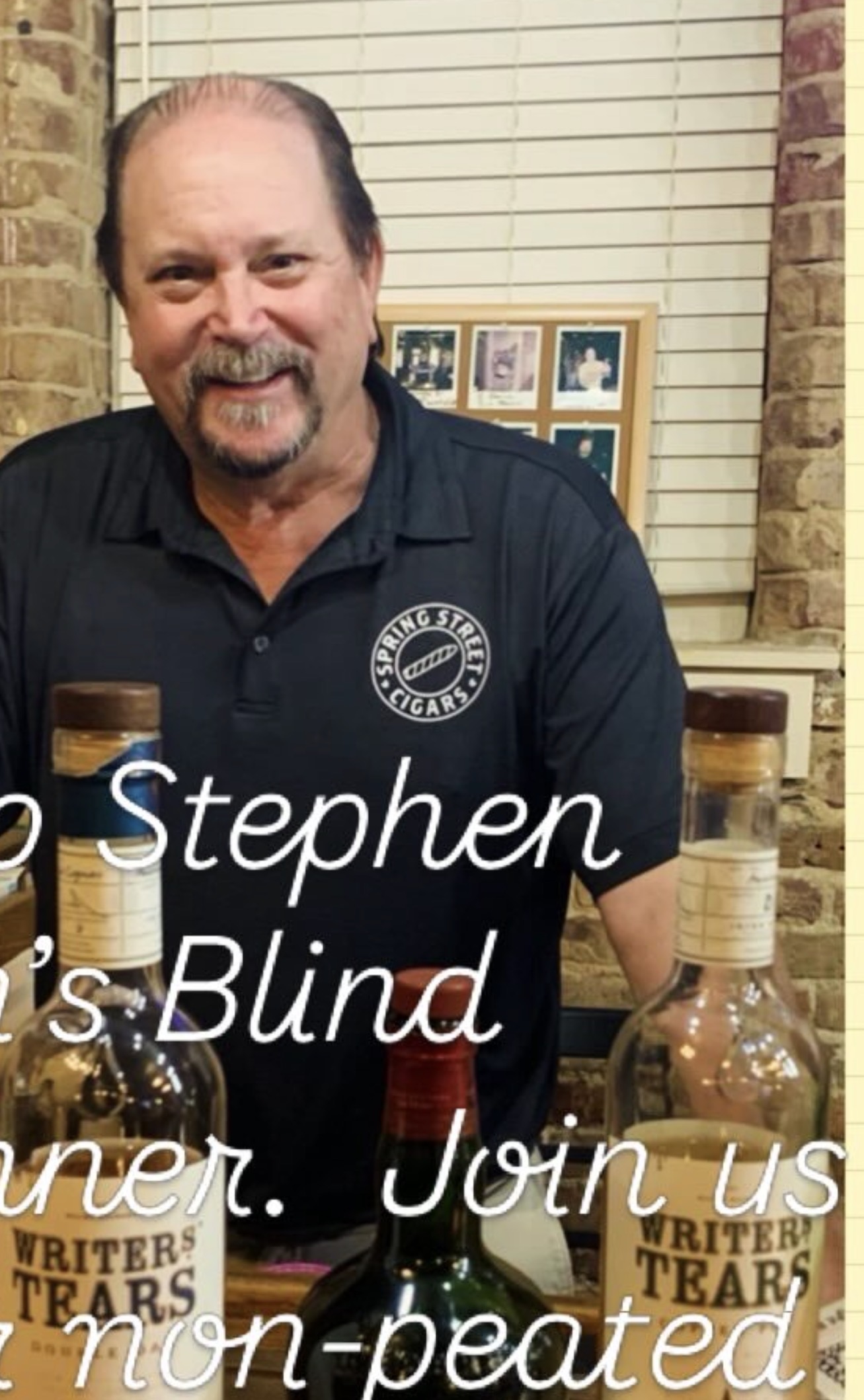
On most afternoons, the humidor at Spring Street Cigars smells faintly of cedar and fresh tobacco, the kind of scent that settles into the air without announcing itself. Behind the counter, Bill moves with the quiet precision of someone who has done this for years—straightening labels, spacing boxes, checking humidity levels with the same care another man might reserve for a family heirloom.
For Bill, the shop is more than a storefront. It’s a place where strangers become regulars, where college students sit beside retirees, where conversations stretch across generations. And for a man who spent decades moving between Chicago trading floors and Houston country clubs, it has become something else entirely: a way to root himself in a community while raising a family in Starkville.
His son just graduated college. That milestone, he says, still hits him in waves.
“When you become a parent, everything changes,” Bill said. “You don’t have time for cigars the way you used to. You’re home more. You’re present. You never know what’s going to happen.”
Parenthood didn’t just change his habits—it changed his priorities. And in a town where rising costs, shifting generational habits, and declining birth rates shape the way families live, Bill’s story reflects a broader truth: community matters more than ever.
 A Declining Trend, A Rising Cost
Bill has watched cigar culture shift dramatically over the years. In the early 1990s, cigars were a status symbol in Chicago—something young professionals used to unwind after long days on the trading floor.
Today, he sees something different.
“Younger people still come in,” he said, “but not like before. They’re more focused on health, fitness, and outdoor activities. And honestly, cigars have gotten expensive. A decent one is over ten dollars. That’s not in a college student’s budget.”
He’s right. According to the Bureau of Labor Statistics, tobacco prices have risen more than 30% in the last decade, outpacing wage growth for young adults.
Inflation hasn’t helped. Groceries, rent, and gas compete with every discretionary purchase. Bill sees it daily.
“People are having to choose what they buy,” he said. “You can’t just walk in and grab whatever you want anymore.”
But despite the economic pressure, something surprising happens inside the lounge: young and old still find each other.
A Community Built on Conversation
Spring Street’s members lounge is one of the few places in Starkville where a 22‑year‑old grad student might sit beside a 70‑year‑old retiree and talk about life, work, or Mississippi State baseball.
“That’s the thing that brings them together,” Bill said. “Smoking a cigar, a pipe—it’s a community. The younger guys come in and learn from the older ones. And they actually listen.”
Pipe Night, held weekly, is the clearest example. Older pipe smokers teach newcomers how to pack a bowl, how to keep a pipe lit, and how to appreciate the ritual. It’s mentorship disguised as leisure.
Madeline Blackburn, a Spring Street employee, sees it every week. “It’s one of the only places in town where generations mix naturally,” Blackburn said. “You’ll see a freshman learning from someone who’s been smoking a pipe for forty years. It’s not forced. It just happens.”
Heath Lollar, another employee, says the community is what keeps people coming back. “People don’t come here just to buy cigars,” Lollar said. “They come here because they feel
known. Bill created that.”
Bill sees it as one of the shop’s greatest strengths.
“We get student‑athletes, professors, lawyers, doctors, political folks,” he said. “They all come here to relax. And I’ve gotten to know the town because of it.”
His wife jokes that he knows more people in Starkville than she does. He laughs when he tells the story, but he doesn’t deny it.
A Turning Point in Starkville
Bill didn’t plan to manage a cigar shop. When he and his wife moved to Starkville to help care for her parents, he walked into Spring Street Cigars as a customer—and immediately felt unwelcome.
“It was dark, uninviting,” he said. “I didn’t feel like I belonged.”
Months later, the owners posted an ad looking for someone to run the shop. Bill responded. When they asked him to “clean up the store,” he knew exactly what needed to change. He opened the blinds. Cleaned every surface. Scrubbed away years of smoke residue. Installed better ventilation. Reorganized the humidor. Raised the quality of cigars the shop carried.
“If a cigar shop is run properly, you shouldn’t smell cigars when you walk in,” he said. “Cleanliness matters.”
Longtime members noticed immediately. Many of them—about fifteen—have been there since before Bill arrived. “Every single one of them has been positive,” he said.
Parenthood and Priorities
Bill’s relationship with cigars has always been tied to life stages. In Chicago, cigars were part of the culture—something he smoked while walking golf courses with caddies or unwinding after work. In Houston, they were a social accessory in the men’s locker room at Royal Oaks Country Club. But when his son was born, everything shifted.
“You don’t have time,” he said. “You’re a dad. You’re home. You’re present.”
He quit smoking for years. Only recently, after moving to Starkville, did he pick it back up—lightly, intentionally, maybe once or twice a week.
“I’m more of a purveyor now,” he said. “I need to know cigars to run the shop. But I’m not sitting around smoking all day.”
His son’s recent college graduation has brought a new sense of reflection.
“You look back and realize how fast it goes,” he said. “You want to build something meaningful.”
The Humidor as a Point of Pride
If the lounge is the heart of Spring Street, the humidor is its pulse. Bill spends nearly an hour a day inside—restocking, rotating inventory, checking humidity, removing empty boxes, making sure every label faces the same direction.
“It’s my pride and joy,” he said. “If something’s off, it bothers me.”
His attention to detail comes from years of experience—and from raising a son who grew up watching him work.
“It’s like stocking a cooler,” Bill said. “Everything should be straight, organized. It should look good.”
A Place That Gives Back
Bill doesn’t see Spring Street as just a cigar shop. He sees it as a community center disguised as a retail space—a place where people decompress, connect, and learn from one another.
And in a world where younger generations are delaying parenthood, where families feel the strain of rising costs, where communities can feel fragmented, places like this matter.
“Starkville needed a place like this,” Bill said. “Somewhere people can slow down, talk, and feel welcome.”
That’s the legacy he’s building—not just for customers, but for his son, who grew up watching him create something meaningful in a small Mississippi town.
“When I smoke a cigar now,” Bill said, “I think about here. I think about this place. And I think about the people."